
A Vision for a Gobind Sarvar Charter School in Papamoa — Years 1–8
Rooted in Sikh values. Fully aligned with the New Zealand Curriculum. A joyful place of learning for every child.
Years 1–8 · Co‑ed · Open to all
Papamoa · Near Gurudwara Guru Nanak Darbar
NZ Curriculum · Punjabi language & culture option
Sikh values: Seva · Simran · Kirat Karni · Sarbat da Bhala
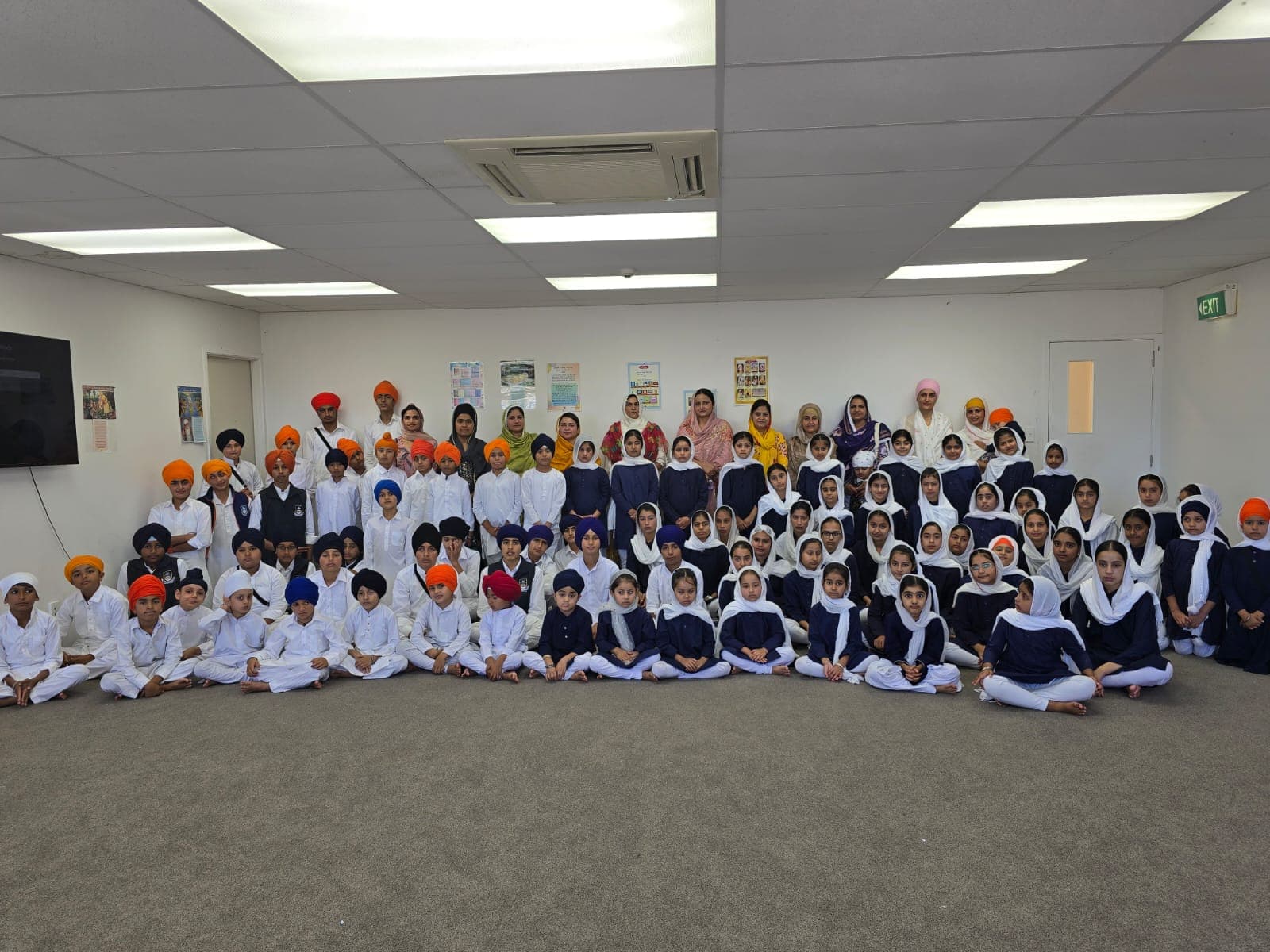
Strong academics with clear progress tracking.
Character & Seva through real community projects.
Whānau and Gurudwara partnerships for belonging.
Our Vision
Our vision is to open Sikh Charter School initially for Years 1-8, most likely based in Papamoa. To do this we need support from families who would value having such a school for their children. If the support is strong, we will have a much better chance of success, when we submit an application.Educationally we envision the school to be a joyful learning community shaped by Sikh values and the New Zealand Curriculum, where we nurture wise, compassionate ākonga/children who think deeply, serve generously (Seva), live with integrity (Kirat Karni), remember the One (Simran), and seek the flourishing of all (Sarbat da Bhala). If this school sounds like a place for your children please complete the expression of interest form.
Excellence in Learning
Evidence-based teaching, clear progress, and high expectations for every learner.
Character & Service (Seva)
Real community projects grow empathy, agency, and leadership.
Wellbeing & Belonging
Inclusive and culturally sustaining practice so every child thrives.
Partnerships
Whānau, Gurudwara, local iwi, and community partners.
Future‑Ready
Key Competencies embedded across learning: thinking, relating, managing self, using language, participating & contributing.
Te Tiriti
We honour Te Tiriti o Waitangi through local curriculum and everyday te reo Māori.
Learning (NZC Alignment)
Structured Literacy & Numeracy
Explicit teaching, progress monitoring, and supports for diverse needs.
Learning Areas
English · Mathematics & Statistics · Science · Technology · Social Sciences · The Arts · Health & PE · Languages (Punjabi option)
Inquiry & Projects
Local contexts: Papamoa coast, sustainability, and service learning.
Key Competencies in Action
- Thinking — students plan and lead Seva projects.
- Using language, symbols, and texts — bilingual learning opportunities.
- Managing self — reflective routines, calm corners, and goal setting.
- Relating to others — teamwork and restorative practices.
- Participating & contributing — whānau, Gurudwara, and community partnerships.
Daily Rhythm (example)
Welcome/karakia, literacy, numeracy, movement/arts, inquiry, and quiet reflection (age-appropriate, inclusive).
Faith & Values
Ik Onkar (Oneness)
Everyone matters. We treat all with dignity.
Seva (Service)
We look for ways to help our community.
Simran (Remembrance)
We practise gratitude and quiet moments.
Kirat Karni (Honest Work)
We learn, try, and act with integrity.
Sarbat da Bhala (Welfare of All)
We seek the good of everyone.
Our special character is Sikh and our doors are open to all. We offer age‑appropriate learning about Sikh history, music (shabad/kirtan), and festivals; reflective practices that welcome all students; and whānau/Gurudwara connection opportunities.